A Packing Checklist for Carry-On Only Travel in Shoulder Season
Shoulder season is a gift for travelers who hate crowds and love soft light, but it is also a test of packing discipline. A morning can start at 8°C and end at 20°C, with rain arriving just as you leave the museum. A week in Lisbon in March or Kyoto in November can ask for a wool layer at breakfast, sunglasses at lunch, and a rain shell by late afternoon. The answer is not a bigger bag; it is a smaller, smarter system built around layers, a short toiletries kit, and tech you actually use. This checklist is designed for a carry-on-only trip of roughly four to seven days in spring or autumn, with room for laundry and a little improvisation. Adjust quantities for your destination, but keep the principle: every item must work with at least two others.
Choose a bag you can carry comfortably for twenty minutes, not just from the taxi to the hotel desk. A 35–40 liter travel backpack or a compact roller works for most people; check your airline’s carry-on dimensions before you commit. Look for a bag that opens flat, has a few useful pockets rather than many fussy ones, and can be compressed when it is not full. If you choose a backpack, make sure the hip belt actually transfers weight to your hips. If you choose a roller, test the wheels on carpet and pavement before you leave.
Packing cubes are not decoration. They compress clothing, separate clean from dirty, and let you find a shirt without unpacking the whole bag. Use one cube for tops, one for bottoms, a small pouch for socks and underwear, and a flat folder for documents. A dirty-clothes cube or a dry bag is worth the few extra grams because it keeps damp laundry away from everything else. Pack by category, not by outfit, so you can see gaps quickly.
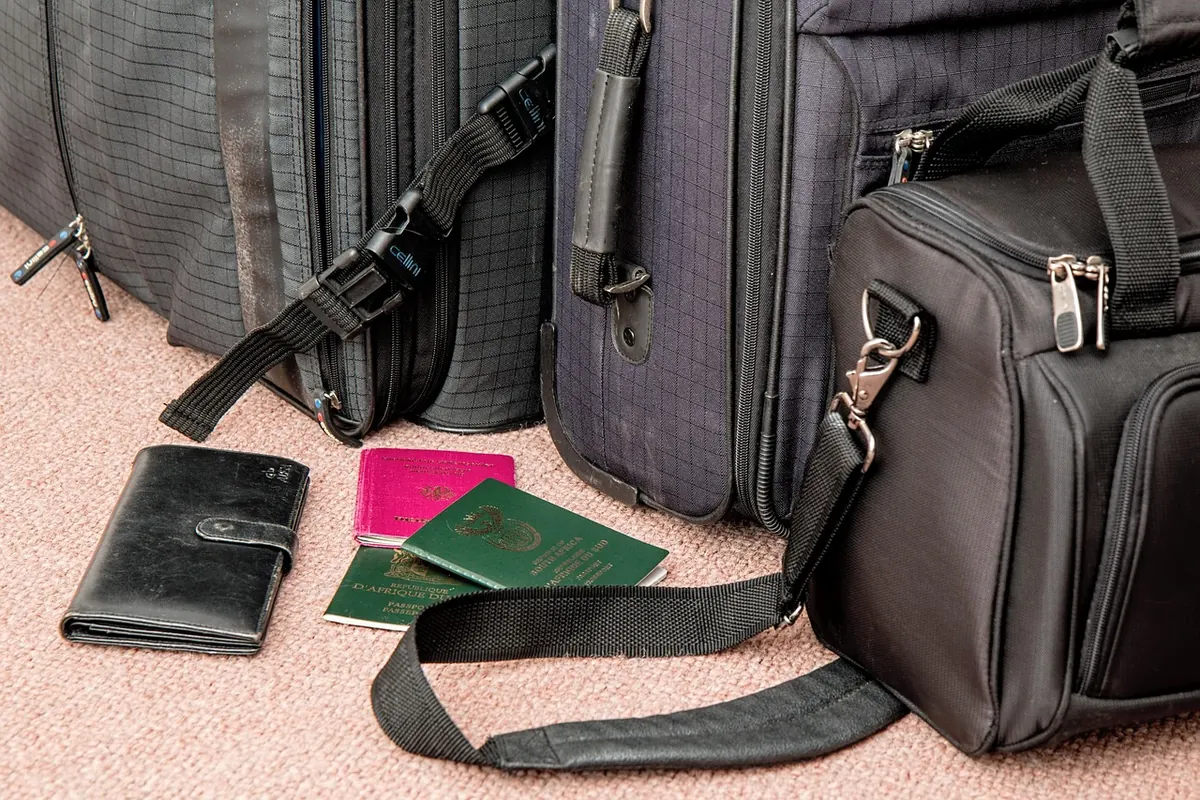
Wear your bulkiest shoes and outer layer on travel day. Keep the items you need at security and on the plane in the top pocket or a small personal item: passport, phone, charger, medication, a pen, and a refillable bottle, empty until you pass security. Add a printed copy of your booking and a backup card separate from your main wallet. The goal is to avoid digging through the bag while a security line moves behind you.
Before you pack, put these in the bag:
Shoulder-season weather rewards a capsule, not a costume. Build around two colors and one accent so every top works with every bottom. Natural wool and technical blends dry faster than cotton and handle temperature swings better. You do not need a different outfit for every day; you need pieces that layer, breathe, and look presentable after a sink wash. A dark pair of trousers and a simple merino top can go from a hike to a casual dinner with the swap of a jacket and shoes.
Start with a base layer that sits against your skin: two or three short- or long-sleeve tops. Add a mid layer, such as a light fleece, thin merino sweater, or quilted vest. Finish with a packable rain shell that blocks wind and sheds drizzle. For cold mornings, add a compact insulated jacket that stuffs into its own pocket. On mild afternoons, the shell and mid layer go into the day bag; at night, all three come back out. This system handles a cold museum, a sunny square, and a windy train platform without a separate outfit for each.
For example, wear a long-sleeve merino base, a light fleece, and a rain shell on a cool morning. By midday, remove the fleece and carry it in your tote. In the evening, add the insulated jacket over the base and fleece. The same trousers and walking shoes work throughout. That is the test: one outfit, three temperatures, no wasted weight.
Clothing checklist
A carry-on toiletry kit is not a miniature bathroom cabinet. It is a short list of products you will use every day, decanted into small containers and kept in one clear bag. Check your airline’s liquid rules before you fly, and remember that the limit is usually about 100 ml per container in a 1 liter bag. Solid formats are your friends: shampoo bars, conditioner bars, toothpaste tabs, and solid deodorant save space and rarely leak. If you are loyal to a particular product, decant only enough for the trip.
Toiletries checklist
If you cannot imagine using it three times on the trip, leave it at home.
Hotels and rentals often provide hairdryers, irons, and basic soap. Unless you have a specific need, do not pack them. Keep the kit in one pouch so it can move from bag to bathroom shelf in seconds. A small microfiber towel is useful for hostels or sink laundry, but it should be thin and quick-drying, not a full bath towel.
Tech is where carry-on bags gain weight without anyone noticing. A phone can replace a camera, guidebook, map, and alarm clock for most trips. Bring a power bank, one or two cables, and a plug adapter that fits your destination. A small e-reader is lighter than several books; a tablet is only worth it if you will use it for work or long train rides. Leave the laptop at home unless the trip requires it.
Tech and day-bag checklist
The day bag should be light enough to carry all afternoon. It holds the layers you shed, the water you need, and the documents you cannot lose. A packable tote takes almost no space and doubles as a grocery bag or beach bag. Keep cables in a small pouch so they do not knot around everything else.
Carry-on only works when laundry is part of the plan. For a four-to-seven-day trip, plan one laundry session every three or four days. Use a sink wash for small items or a laundromat for a full reset. Quick-dry fabrics make the difference: a merino top or technical shirt can dry overnight, while heavy cotton may still be damp the next morning.
Laundry and repair checklist
A mid-trip reset also means repacking. Sort clean from dirty, restock the day bag, and check what you have not used. If an item has stayed at the bottom of the bag for several days, it is probably not earning its place.
Packing day is easier if you pack in the same order every time. Start with the items you will not need until you arrive. Put heavy items close to your back if you are using a backpack, or near the bottom of a roller above the wheels. Keep liquids and documents accessible. Leave 10 to 15 percent of the bag empty for souvenirs, laundry, or a layer you shed during the day.
A pack is finished when you can lift it into an overhead bin, zip it without strain, and carry it for twenty minutes. If it fails those tests, remove something. A lighter bag makes every train connection, stairway, and last-minute walk easier.
Most carry-on mistakes are not about what you forgot; they are about what you packed “just in case.” Multiple pairs of shoes, heavy jeans, a bulky towel, formal clothes for a dinner that may not happen, and a full-size guidebook are common culprits. Hotels have hairdryers. Phones have books. A single smart-casual outfit covers more dinners than three dressy ones.
The best carry-on item is often the one you decided not to pack.
Shoulder season can throw a cold snap or a rainy afternoon into an otherwise mild week. Keep a compact umbrella if you are city-based, or rely on a hooded rain shell if you are walking more than commuting. Waterproof shoes or a small tin of waterproofing wax can save a day. Add a sleep mask and earplugs for noisy hostels or early trains, and pack a few cold or allergy tablets if you are sensitive to weather changes.
Finally, remember that a carry-on-only trip is not about deprivation. It is about reducing decisions. When every top works with every bottom and every layer has a purpose, you spend less time unpacking and more time outside. Pack for the weather you will probably get, add one layer for the weather you might get, and leave enough space to bring something home.
Photo: stevepb / Pixabay
Previous Post
Should You Buy a Rail Pass or Point-to-Point Tickets in Europe?
Next Post
How to Spend a Rainy Day in Lisbon Without Museums