Common Mistakes to Avoid on Your First Trip to Japan
You will make mistakes in Japan. Everyone does, including people who have been there a dozen times. The point is not to memorise a rulebook before you fly, but to sidestep the handful of errors that quietly drain a trip: the cash-only ramen shop you can't pay at, the day you planned across three cities and saw none of them properly, the bag of rubbish you end up carrying for six hours. What follows is the practical stuff, written the way a friend who has been there would tell you on the train to the airport.
Japan is far more card-friendly than its reputation suggests, but the exceptions are exactly the places you will want to eat. Chain hotels, department stores, convenience stores and bigger restaurants take cards without complaint. Small ramen shops with ticket machines, neighbourhood izakaya, temple counters, market stalls, rural bus fares and coin lockers often do not. Nothing spoils a good day faster than finding the perfect eight-seat yakitori counter and realising you cannot pay.
Carry a buffer of cash — enough for a day or two of food and small purchases — and top it up before you leave a city. Convenience store ATMs and post office ATMs are generally the most reliable for foreign cards; the airport is a sensible place to make a first withdrawal. Keep a second card separate from the first, and check with your bank about foreign transaction fees before you go, since that is a money decision only your bank can answer properly.
Two small habits go with the cash. First, put your money on the little tray at the register rather than into the cashier's hand — this is standard, and handing cash over directly can feel abrupt. Second, do not tip. It is not expected in restaurants, taxis or hotels, and leaving extra can cause genuine confusion.
Japanese trains are orderly in ways that are easy to read once you know what you are looking at. Queue at the platform markings, stand aside and let passengers off before you get on, and keep your phone on silent. A phone call on a commuter train is the one thing that will draw looks. On crowded carriages, swing your backpack onto your front or stow it overhead — it is basic courtesy and it stops you becoming the obstacle in the doorway.
A few other details save real friction:
Public rubbish bins are rare, and the reason is cultural rather than sinister: people take their waste home. The convenience store bins are a courtesy for what you just bought there, not a public service, and stacking your picnic remains on top of them is a small act of bad manners. Carry a small bag for the day's rubbish, empty it at your hotel, and you will stop noticing.
When you do meet sorting bins, follow the labels: cans, plastic bottles, combustible waste. Pet bottle caps and labels often go separately. Hotel rooms usually have a bin and a recycling slot; if the system is unclear, ask at the front desk rather than guessing. It takes thirty seconds and it is the kind of thing staff remember fondly.
Most of Japan does not require a reservation. Some of it absolutely does, and first-timers tend to discover this too late. Small counters with eight seats, popular ryokan, major museums with timed entry, and the shinkansen during Golden Week, Obon or New Year all fill up. Reservations often open at a fixed time weeks or months ahead and sell out in minutes for the sought-after places.
Pick two or three things that would genuinely disappoint you to miss, find out when booking opens, set a reminder, and keep the rest of the trip loose. If a restaurant needs a Japanese phone number or a deposit, your hotel concierge can often help — ask politely and early. Read the cancellation policy before you commit, especially on third-party booking sites. And leave at least two unscheduled evenings in any week-long trip; the best meal of the holiday is usually the one you found by walking past it.
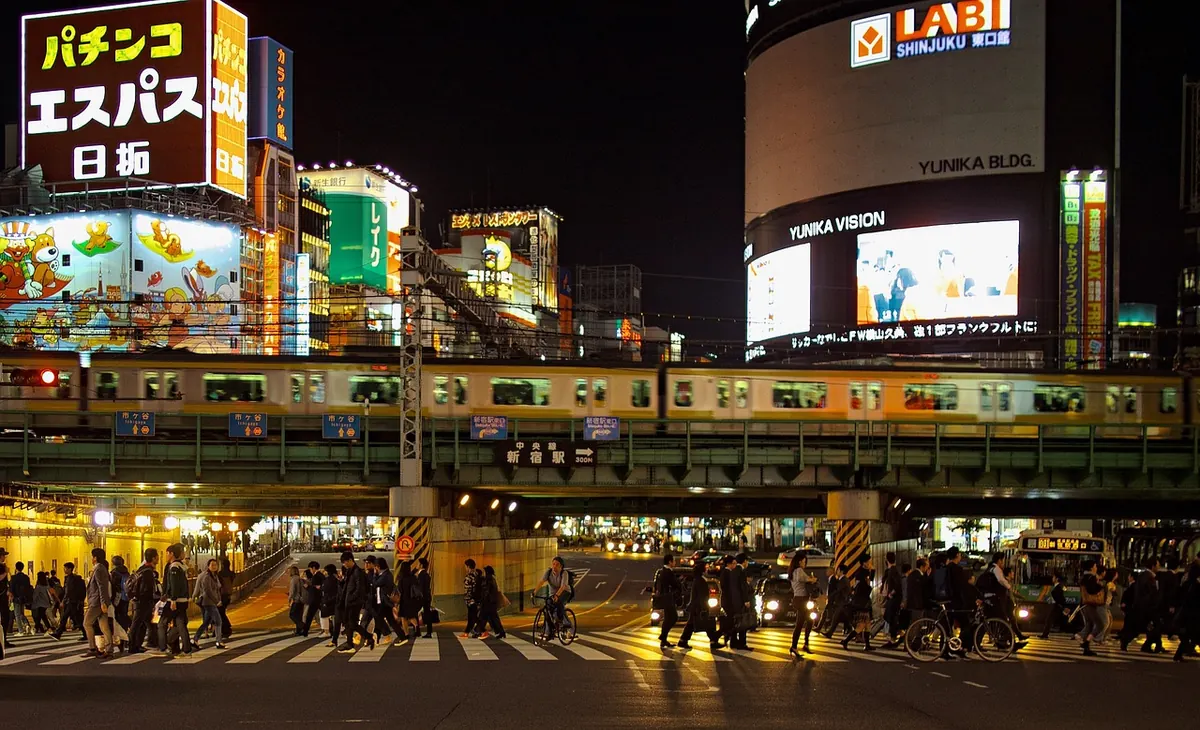
The most common first-timer error is not etiquette at all. It is arithmetic. Tokyo, Kyoto and Osaka in six days, with Hiroshima bolted on, looks fine on a spreadsheet and feels like a forced march. Stations here are cities in themselves: Shinjuku and Osaka-Umeda can swallow forty minutes just walking between the right exit and the right train. Add jet lag, and a packed first day is wasted anyway.
A workable rhythm: one neighbourhood per half-day, two or three major sights a day at most, and the rest left to food and wandering. Visit the famous places early, before the crowds and the heat. Accept that you will not see everything and that the trip is better for it. If you can, keep a buffer day at the end for the things you only hear about once you arrive — a day trip, a market, a return to the shop you liked.
Shoes come off in ryokan, many temples and some restaurants. Look for a raised step at the entrance and a row of shoes. Wear socks you would not be embarrassed by. In an onsen, wash thoroughly at the seated showers before entering the bath, keep the small towel out of the water, and check the rules on swimwear and tattoos at the entrance — policies vary by facility. Chopstick etiquette is simple: do not stand them upright in rice and do not pass food from chopstick to chopstick. Beyond that, quiet is the default in shared spaces, and a soft voice reads as good manners everywhere.
Nobody expects a visitor to get everything right. They notice the effort, and the effort is the whole point.
Everything else you will pick up in the first two days, the way everyone does. Go with a little cash, a little patience, and a schedule with room to breathe, and Japan will quietly meet you halfway.
Photo: StockSnap / Pixabay
Previous Post
A Beginner's Guide to Overnight Trains in Europe
Next Post
Should You Buy a Rail Pass or Point-to-Point Tickets in Europe?