How to Keep a Travel Journal That You'll Actually Reread
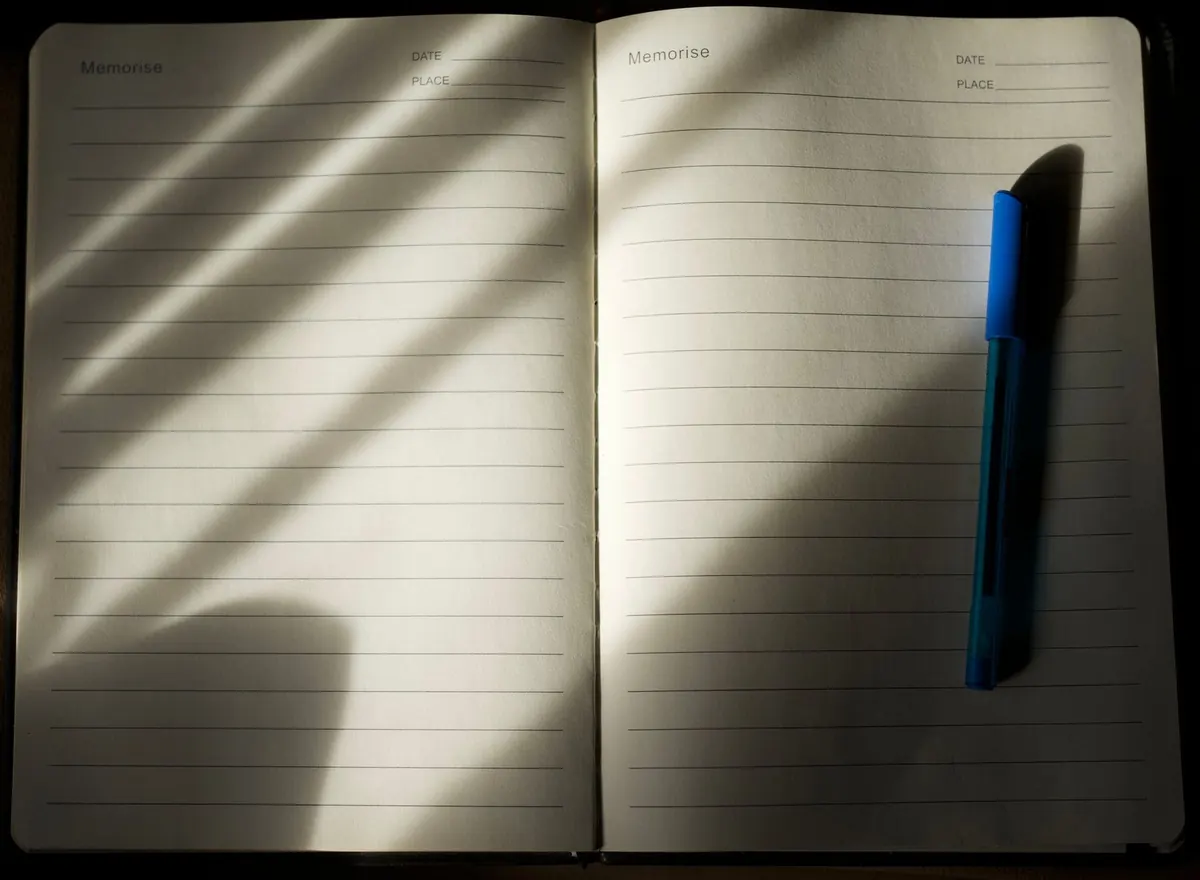
Most travel journals die on day three. The first entry is careful and enthusiastic, the second is shorter, and by the time you reach the good part of the trip the pages are empty and the notebook is at the bottom of your bag under a charger and a crumpled map. It rarely fails because of laziness. It fails because the notebook was never designed to be used on a wet bench outside a train station with ten minutes to spare.
A journal you'll actually reread is built from small decisions: where you keep the pen, what you write when you're tired, where the ticket stubs go, and what you do in the twenty minutes after you get home. None of it is hard. It just has to be decided before you leave, not somewhere around day four.
Ten minutes of preparation turns a blank book into a working tool. Do this the night before you fly, while you're still calm enough to make sensible choices.
Forget the idea of writing a diary. Aim instead for four quick lines, written wherever you happen to land at the end of the day: one thing you saw, one thing you overheard, one thing that annoyed you, and one thing you'd tell a friend first. That's it. Most evenings it takes four minutes; occasionally one of the lines opens into a full page, and that's a bonus rather than the standard.
The trap is writing summaries. "Great day, walked a lot, lovely dinner" tells you nothing in two years. Write the specific thing instead: the baker who handed you a warm roll while you waited for change, the argument in the next queue about a bus that never came, the church you ducked into only because it started raining and the floor made of small coloured stones.
Missed a day? Don't try to reconstruct it from memory. Open your photos over breakfast, look at the timestamps, and write two sentences about the one image that surprises you. Then move on. Journals collapse under the weight of unfinished catch-up work far more often than under honest gaps.
Ticket stubs, museum wristbands, boarding passes, a menu from the place you'd go back to, the card of the woman who rented you the kayak. Keep them, but keep them annotated. An unlabelled ticket from a museum in a city you visited in 2019 is a piece of card. The same ticket with "the room with blue tiles, 11:40, feet already hurting" written on the back is a door back into the day.
So empty your pockets every evening and use one line per item:
Then decide. Glue in the two or three things that carry a story and leave the rest in the envelope. A journal that bulges with unlabelled receipts becomes a box of rubbish with a spine; a journal with four annotated stubs per week becomes something you flip through. If you're travelling with a gluestick and no patience, do the pasting in one batch on a long train ride — it's a pleasant job with a window involved.
Some evenings the four lines won't come. Keep a short list of prompts written inside the front cover and use one when you're empty. Good ones ask for detail, not for feelings you don't have yet.
The answers to these age well. Moods fade and are re-invented by memory; a note about the noise of the seagulls at five in the morning or the exact price of the ferry stays true.
Before you fly back, or on the first night in your own bed, write one deliberate entry and mark it clearly. It has three parts: the three things you want to remember in a year, the one thing you'd do differently, and a short paragraph for whoever goes there next — the name of the street with the good market, the bus that isn't worth taking, the bakery that closes on Mondays.
This is the page that makes the whole notebook useful rather than sentimental. It's also the easiest one to skip, so give it a fixed place: the last page of the book, or the first, if you'd rather see it when you open the cover.
Unpacked suitcases have a way of absorbing everything else. Before that happens, sit down once with the journal, a pen and the envelope of paper. Fill in the index you left room for, add the stubs you didn't paste in, and tab the four or five pages you'd want to read again. Write the return date inside the back cover. Then put the notebook somewhere you'll see it — a shelf by the desk, a basket near the door — not in a box with the souvenir coins.
Reread it on the anniversary of the trip, or the week before you leave on the next one. That second reading is where the system proves itself: the four-line entries have become the parts you quote to people, the annotated tickets carry the whole afternoon, and the page you wrote on the way home tells you, plainly, what you thought the trip was about before memory tidied it up.
One notebook, one pen, one envelope, five minutes a night. That's the whole machine. Set it up before the trip and it will still be working when you get back — which is the only test a travel journal needs to pass.
Photo: Taiye Salawu / Pexels